Start with the instructions for your exact pan
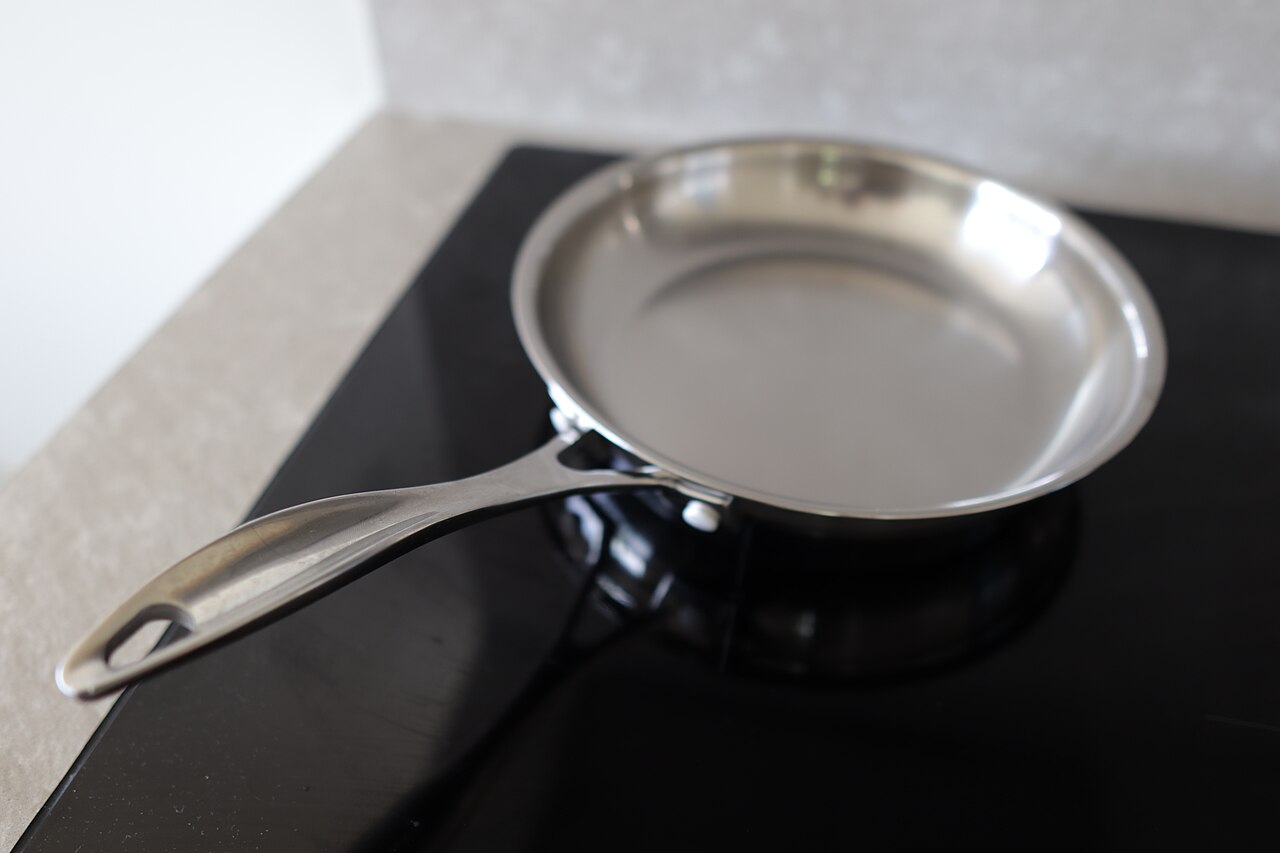
The most useful starting point is simple: identify the pan before choosing the cleaning method. All-Clad explicitly says care can vary by material and collection and directs owners to their product-specific instructions. This guide covers uncoated stainless steel cooking surfaces, not every pan with a stainless steel exterior. (all-clad.com)
Find the collection name or model number, then open its care guide. Keep that guide handy for questions about the interior, exterior, lid and dishwasher compatibility. KitchenAid’s general cookware guidance likewise makes the manufacturer’s care instructions the starting point rather than treating all cookware alike. (kitchenaid.com)
The steps below focus on ordinary washing and identifying marks. For handling precautions, specialist cleaners or treatments involving heat, consult your exact product manual. This is not a universal stain-removal formula.
Clean everyday food and grease first
For routine washing, KitchenAid recommends warm water, mild dish soap and a soft sponge, followed by thorough rinsing and immediate towel drying. Its stainless steel guidance also discourages abrasive scrubbers that can scratch the surface. (kitchenaid.com)
A straightforward sink-side routine is:
- Let the pan cool completely before cleaning, following its exact care instructions. All-Clad care guidance
- Rinse away loose food with warm water.
- Wash the cooking surface with dish soap and a soft sponge.
- Rinse thoroughly.
- Dry with a soft towel rather than leaving water on the surface. (kitchenaid.com)
ZWILLING similarly recommends handwashing stainless steel cookware with warm water, a little washing-up liquid and a soft cloth. It advises against leaving food remnants to dry because they can contribute to staining or discoloration. (zwilling.com)
Think of this first wash as the sorting stage: afterward, decide whether you still have food to remove or a mark to investigate.
Treat stuck-on residue as a separate problem
All-Clad’s stainless steel instructions include soaking in warm, soapy water before washing with a sponge or soft cloth. For more difficult cleaning, that section permits a nylon scouring pad specifically on stainless steel surfaces. This is permission for a particular material, not a recommendation for every surface on every pan. (all-clad.com)
ZWILLING’s stainless steel section allows the rough side of a sponge for serious dirt on the inside and base. Its nonstick section gives different restrictions. The practical lesson is to match both the tool and the part being cleaned to the relevant instructions. (zwilling.com)
If ordinary washing leaves stubborn residue, return to the pan’s care guide rather than combining several stain-removal suggestions. Record what remains and where it is; those details will make a support inquiry more useful.
Distinguish rainbow color from white spotting
KitchenAid identifies rainbow-like, blue and bronze discoloration as appearances that can occur on new stainless steel products or after exposure to higher temperatures. Its guidance separately identifies a spotted white film as a possible mineral deposit from water. These are distinct from accumulated food and grease. (producthelp.kitchenaid.com)
Use these categories when looking up the next step:
- Food or grease buildup: consult the residue-cleaning instructions.
- Rainbow, blue or bronze coloring: consult the discoloration section.
- Spotted white film: consult the water-spot or mineral-deposit section. (producthelp.kitchenaid.com)
KitchenAid recommends warm rinsing and thorough towel drying to help prevent water spotting. Its additional stain treatments are more specific than routine washing; this guide does not reproduce chemical mixtures or heated cleaning procedures. (producthelp.kitchenaid.com)
Check dishwasher permission separately
Dishwasher compatibility and the manufacturer’s preferred cleaning method are not necessarily identical. ZWILLING describes its stainless steel cookware as dishwasher-safe while still recommending handwashing. (zwilling.com)
All-Clad says some products carry dishwasher-safe labeling but recommends checking individual care details. Do not turn a brand-level statement into permission for an unidentified collection. (all-clad.com)
Keep the cleaning kit modest
For the routine methods described here, start with dish soap, a soft sponge or cloth, and a drying towel. These match the basic tools in the manufacturers’ washing guidance; a specialist scrubber is a separate, product-dependent choice. (all-clad.com)
Before buying anything else, write down three things: your pan’s collection, its permitted cleaning tools and the kind of mark you want to remove. That small checklist keeps the task focused on your pan—not on assembling a cupboard full of cleaning products.