The short answer
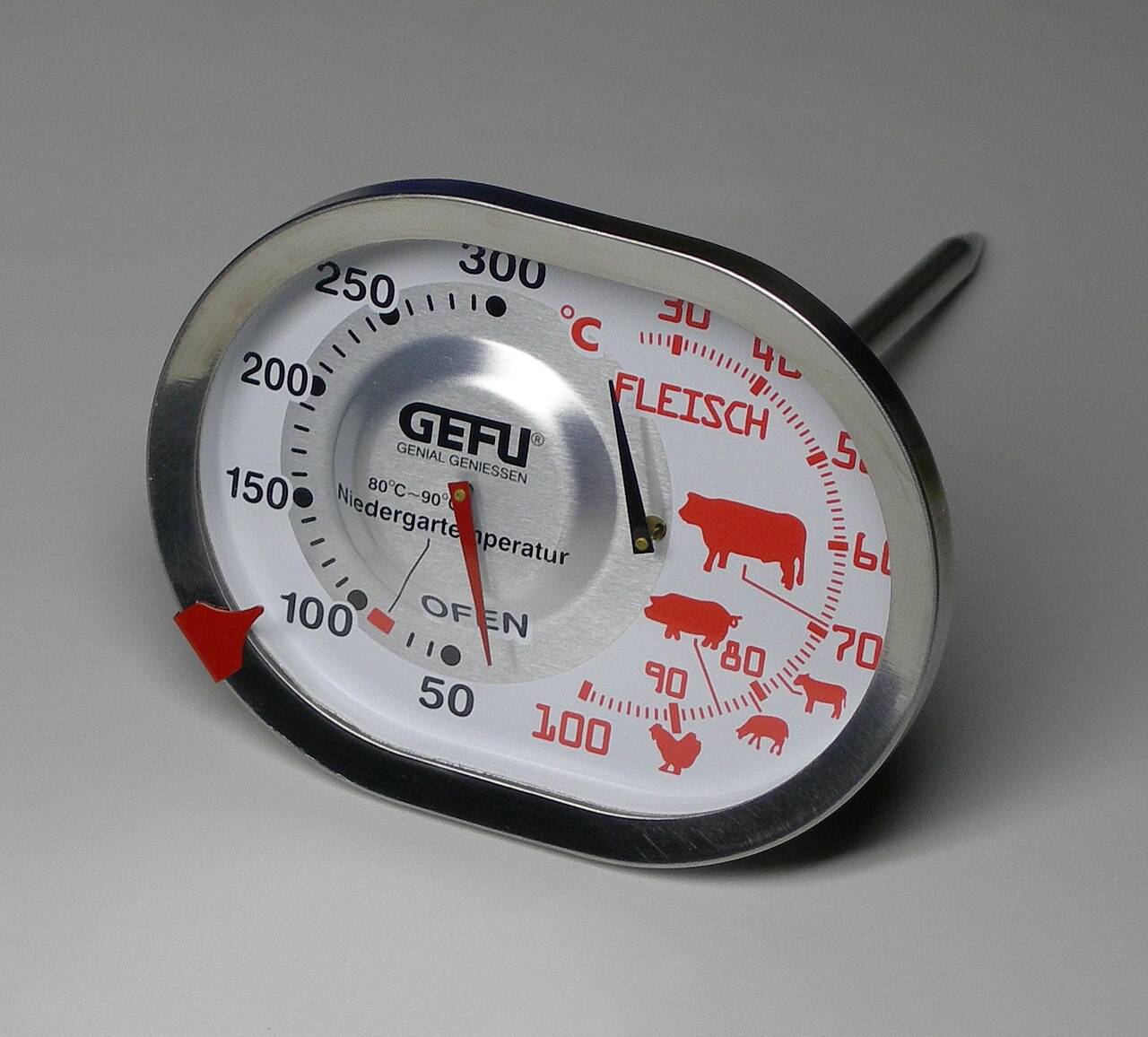
An instant-read thermometer answers, “What is the temperature here, right now?” A leave-in thermometer answers, “How is the temperature changing while this cooks?” Thermapen ONE illustrates the handheld approach; DOT illustrates a separate probe connected to a temperature display and alarm. They solve different monitoring problems rather than competing for exactly the same job. (thermoworks.com)
Our buying recommendation: start with an instant-read if you mainly want spot checks. Prioritize a leave-in if watching a longer cook is your biggest frustration. If both tasks matter, consider them complementary tools.
What an instant-read thermometer does
An instant-read is a handheld tool for individual measurements. On Thermapen ONE, the sensor sits at the probe tip, so the reading represents that location—not an average of the entire food. Its folding probe activates the instrument when opened. (thermoworks.com)
That makes this format a sensible choice when your question changes from one piece of food or measurement location to another. You are choosing where to check rather than committing a probe to one monitoring position.
“Instant-read” does not mean every reading appears immediately under every condition. Thermapen ONE’s manual explicitly notes that reading times vary with the food. This guide does not rank thermometers by independently tested speed or accuracy. (thermoworks.com)
A crucial distinction: a probe’s measurement range is not permission to leave the whole instrument inside an appliance. Thermapen ONE’s manual excludes leaving it in an oven. Refer to your exact product manual for permitted uses. (thermoworks.com)
What a leave-in thermometer does
A leave-in system keeps a suitable probe in place for ongoing monitoring. DOT displays the current probe temperature and provides an adjustable alarm. Its documentation also distinguishes food probes from an optional air probe intended for monitoring the cooking environment. (thermoworks.com)
With a wired system, “leave-in” describes the probe—not necessarily the display unit. ThermoWorks specifies that DOT’s body belongs outside the oven or smoker. The probe, cable, and display have different exposure limits. (help.thermoworks.com)
When comparing a wireless option, check whether it requires a separate display, hub, or app. Treat those requirements as part of the purchase decision instead of assuming an add-on probe is a complete system.
A decision tree by monitoring task
- Need occasional readings from several pieces or locations? Our first choice would be an instant-read. Thermapen ONE’s tip-sensing design supports this spot-checking role. (thermoworks.com)
- Need to follow one food over time and receive a temperature alarm? Choose a leave-in system with those functions. DOT is one documented example. (thermoworks.com)
- Need cooking-chamber information as well as food readings? Look for explicitly supported ambient sensing. DOT lists a separate optional air probe. DOT documentation
- Need ongoing monitoring and occasional checks elsewhere? Our recommendation is a leave-in plus an instant-read, rather than expecting either format to handle every task equally conveniently.
Let appliance restrictions narrow the choice
“Suitable for grilling” needs closer reading than a product-category label. ThermoWorks’ DOT support guidance identifies grilling flare-ups and broiling as situations that can exceed probe specifications, and points readers toward an instant-read alternative. That is a product-specific limitation, not a universal rule covering every leave-in probe. (help.thermoworks.com)
DOT’s current product page lists separate instrument and cable limits and links its operating instructions. For moisture precautions, probe handling and cable routing, consult that current manual rather than relying on a single headline maximum. (thermoworks.com)
For air fryers, pressure cookers, microwaves, or other specialized appliances, the sources here do not establish blanket compatibility. Treat that as an unanswered purchasing question: seek explicit documentation for the exact combination before selecting a thermometer for it.
A compact buying checklist
Compare the intended monitoring task, compatible probes, display and alarm arrangement, and the exact manual’s care, battery and warranty requirements. Check current specifications rather than treating advertised response time as a result from our own testing.
What to prioritize before buying
Write down your main task, appliance, desired display location, and whether you want an alarm. Then compare only products whose documented uses fit that list.
For an instant-read, I would prioritize comfortable handling and an easy-to-read display. For a leave-in, I would prioritize the monitoring arrangement: suitable probes, useful alerts, and any required companion hardware. Choose the simplest setup that answers your actual cooking question—not the longest feature list.