The quick answer
Choose a saucepan for depth, a sauté pan for a broad base with straight sides, and a skillet for an open shape with sloping sides. Those differences help explain why a saucepan suits liquids, while a skillet makes turning food easier. A sauté pan occupies the useful middle ground. (all-clad.com)
Rather than asking which pan is best overall, ask what your next meal needs: room for liquid, access for a spatula, or space for browning followed by a sauce.
A simple shape diagram
These simplified side profiles illustrate shape only. They are not to scale, product measurements, or depictions of testing; handles and lids are omitted.
- Saucepan: │___│ — imagine tall, upright walls around a relatively narrow base.
- Sauté pan: │________│ — a wider base bounded by upright walls.
- Skillet: ╲________╱ — a broad, shallow profile with outward-sloping walls.
All-Clad distinguishes saucepans from sauté pans by their taller walls and smaller diameter, and describes frying pans as wide with low, sloped sides. KitchenAid uses “skillet” for the sloped-sided shape shown here. (all-clad.com)
Saucepan: prioritize depth and liquid
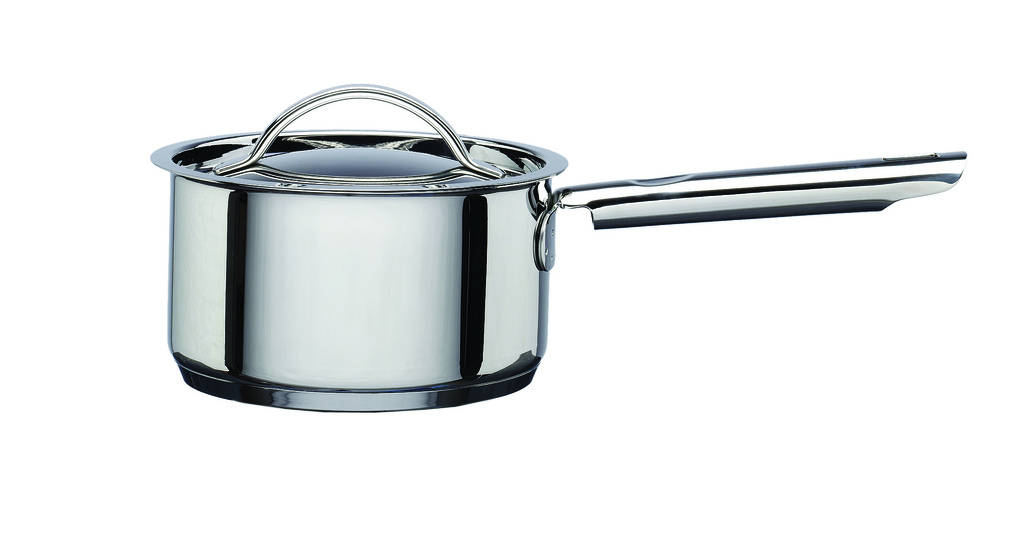
A saucepan makes sense when the main job is boiling, simmering, or warming something liquid. Its relatively narrow opening and tall sides favor containing liquids rather than spreading ingredients across a broad browning surface. All-Clad also identifies this shape with limiting evaporation. (all-clad.com)
Despite its name, it is not reserved for sauces. All-Clad lists soups, rice, pasta, reheating, and simmering stocks among the uses for its 3-quart saucepan. Think of it as your liquid-focused everyday pan, not a miniature skillet. (all-clad.com)
For shopping, start with the quantities you actually prepare. Write down your usual soup portion or rice batch, then compare the capacities required by the recipes you already use. That is more useful than choosing a size simply because it comes in a set.
Sauté pan: brown first, then add more
A sauté pan combines a broad cooking surface with upright sides. All-Clad describes its 3-quart model as suitable for browning, searing, pan sauces, risotto, and braised greens; that model includes both a lid and a helper handle. (all-clad.com)
The practical distinction is the transition between tasks. KitchenAid specifically describes sauté-pan depth as useful for adding ingredients after browning, as well as braising, stewing, and deglazing. That makes this shape worth considering when your meals frequently move from separate browned ingredients to a saucy finished dish. (kitchenaid.com)
Do not assume the name means it is the only pan for sautéing. KitchenAid also lists sautéing vegetables among skillet uses. Choose by the rest of the meal, not that single cooking verb. (kitchenaid.com)
Skillet: prioritize access and turning
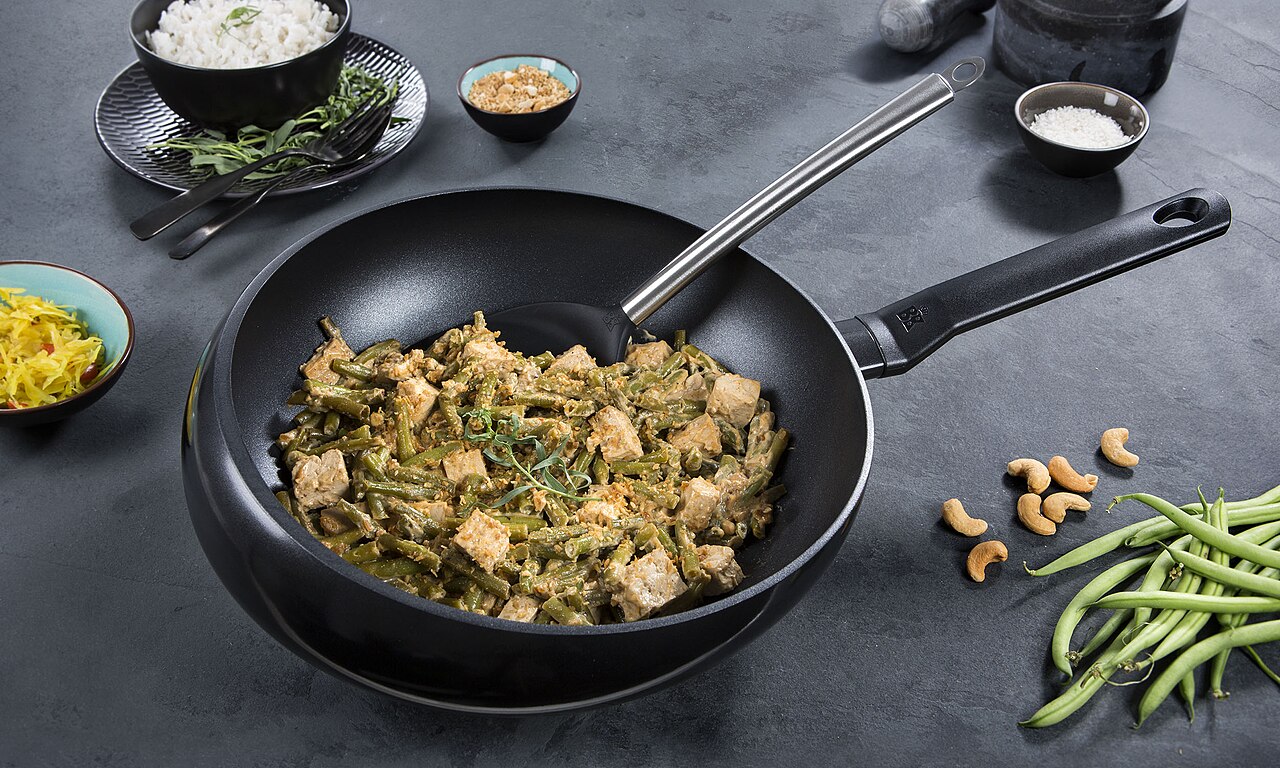
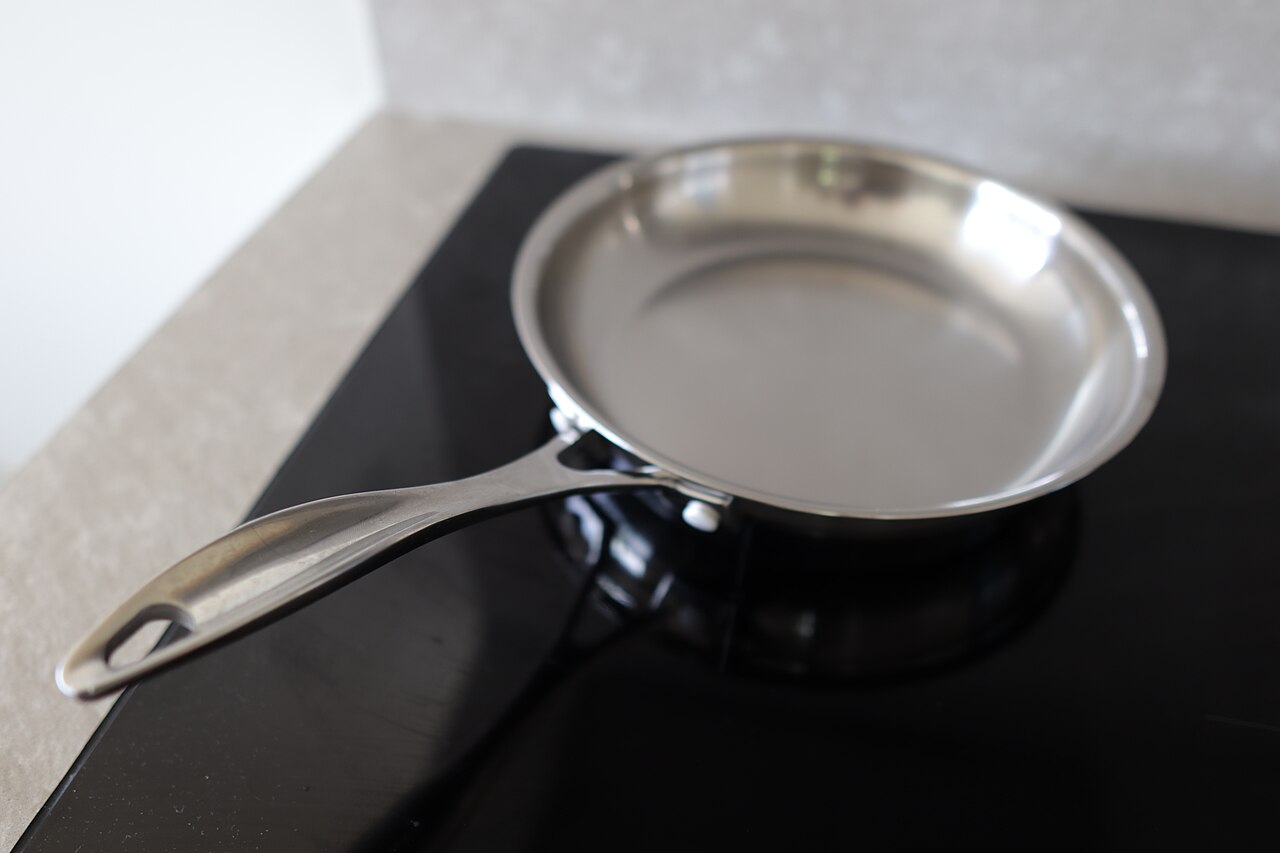
The skillet’s sloping walls help food slide out. KitchenAid’s cookware guide associates this shape with omelets, pancakes, quesadillas, sautéed vegetables, and seared meat or fish. It is a natural choice when turning, lifting, or sliding food matters more than containing substantial liquid. (kitchenaid.com)
Match the task to the shape
Use these as starting points rather than rigid rules:
- Soup reheating, rice, or a simmering sauce: saucepan. These are among the saucepan tasks identified by All-Clad. (all-clad.com)
- Browning followed by a pan sauce, or a meal involving braised greens: sauté pan. All-Clad lists these uses for its lidded model. (all-clad.com)
- Pancakes, omelets, or quesadillas: skillet. KitchenAid explicitly matches these foods to its sloped-sided pans. (kitchenaid.com)
Compare dimensions, not just capacity
Two pans labeled 3 quarts need not occupy the same space. All-Clad lists its D3 3-quart saucepan at 17.3 × 8.8 × 6.4 inches and its D3 3-quart sauté pan at 20.8 × 11.4 × 5.3 inches. These are the published product dimensions—not verified interior base measurements. The specification fields do not explain the measurement boundaries, so do not treat them as usable cooking-surface dimensions. (all-clad.com)
Before buying, ask for interior base diameter, body depth, overall dimensions, and confirmation of whether a lid is included. Consider cupboard space and whether you prefer a helper handle, too.
My practical starting recommendation is a saucepan and skillet; consider adding a sauté pan if browning-then-simmering meals feature heavily in your routine. This is a shape guide, not a performance ranking. For compatibility, care, and operating limits, consult your exact product manual.